
Every year, two events shape the conversation in the show dog world more than any other: the Westminster Kennel Club Dog Show and Crufts. In 2026, both competitions delivered historic, headline-making results that every serious breeder and handler should understand. Whether you are actively competing, planning a litter, or simply passionate about conformation, the dogs that won Best in Show this year carry lessons that go far beyond the ribbon.
This post breaks down what happened at each show, what the winning dogs represent in terms of breed standards, and what breeders and handlers can take away heading into the rest of the 2026 show season.
The 150th Westminster Kennel Club Dog Show: A Historic Milestone
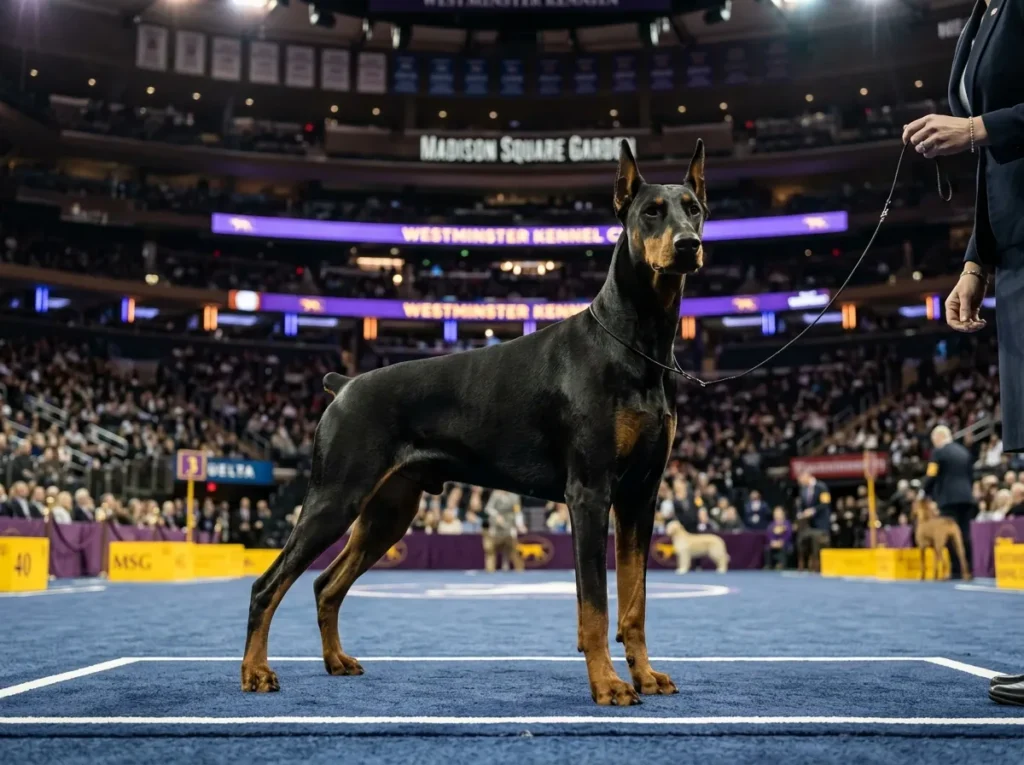
The 2026 Westminster Kennel Club Dog Show was already special before a single dog stepped into the ring. Held at Madison Square Garden in New York City, this was the 150th edition of the event — the second-longest continuously held sporting event in America, surpassed only by the Kentucky Derby. Over 2,500 dogs representing 204 breeds competed across two days of judging, making it one of the most competitive fields in the show’s history.
Penny the Doberman Pinscher Claims Best in Show
The winner of Best in Show at the 150th Westminster was “Penny” — formally known as GCHP CH Connquest Best Of Both Worlds — a 4.5-year-old female Doberman Pinscher from Reseda, California. Handled by veteran Andy Linton, Penny emerged from the Working Group to beat all seven group finalists and claim the top prize in front of a sold-out Madison Square Garden crowd.
What made Penny’s win remarkable was not just her on-the-night performance. Best in Show judge David Fitzpatrick cited her “beautiful head, great balance and angulation,” and described the 2026 lineup as one “that will go down in history.” Penny had already accumulated 66 Best in Show titles before Westminster, and her ring temperament — calm, poised, and fully present — was on full display throughout the evening.
For handler Andy Linton, the win carried deep personal significance. He had previously won Westminster’s Best in Show in 1989 with a red female Doberman named Indy — 37 years earlier. Competing while managing personal health challenges, Linton called the victory “one of my goals,” and the moment moved many in the audience to tears.
What Penny’s Win Tells Us About Breed Standards
The Doberman Pinscher has now won Westminster’s Best in Show five times, with victories in 1939, 1952, 1953, 1989, and 2026. Each of those wins has reinforced the same core qualities that the AKC breed standard for the Doberman Pinscher describes: a compact, muscular build, a noble wedge-shaped head, easy and athletic movement, and a temperament that is alert without being reactive.
For breeders, Penny’s win is a clear signal. Judges at the highest level are rewarding dogs that embody the full package — not just physical structure, but movement, temperament, and presence. A dog can have flawless conformation on paper and still fall short in the ring if it does not carry itself with the ease and confidence that top-tier judges are looking for.
If you are newer to understanding what judges evaluate in the ring, our post on what judges look for in a show dog offers a detailed breakdown of those criteria.
Crufts 2026: The Clumber Spaniel Returns After 35 Years
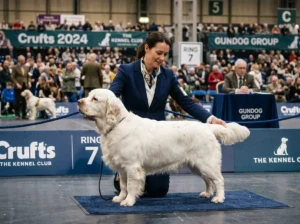
Across the Atlantic, the 2026 Crufts Dog Show at the Birmingham NEC delivered its own landmark result. The Best in Show winner was “Bruin” — a Clumber Spaniel owned by Lee Cox — making it the first time the breed had claimed the Keddell Memorial Trophy since 1991. That is a 35-year gap between titles for a breed with deep historical roots in the British show world.
Bruin finished ahead of six other finalists, including Basset Griffon Vendeen “Meghan,” who took Reserve Best in Show. Notably, the Clumber Spaniel is classified as a vulnerable native breed by the UK Kennel Club, meaning its registered population has fallen to levels that raise concerns about long-term preservation. Bruin’s high-profile win is widely seen as a meaningful boost for breed awareness and responsible breeding of this lesser-known spaniel.
The Significance of a Vulnerable Breed Winning Best in Show

When a vulnerable or rare breed wins at Crufts, the ripple effects are real. Breed registrations typically increase in the months following a high-profile win as public interest grows. For the Clumber Spaniel community, Bruin’s victory is both a celebration and a responsibility — a reminder that greater visibility must be matched with greater commitment to health testing and ethical breeding practices.
This is a pattern worth watching across all breeds. The attention a Best in Show win generates is an opportunity to educate the public about what the breed actually requires in terms of care, temperament, and lifestyle fit — not just what it looks like under the lights. That educational role falls first and foremost on breeders.
For those thinking about ethical breeding and genetic diversity in show dogs, the Crufts 2026 results are a timely prompt to revisit how breeding decisions can either strengthen or strain the long-term health of a breed population.
The Crufts Controversy and What It Means for the Sport
The 2026 Crufts show also attracted unwanted attention when information about Bruin’s owner came to light following the win. A historical animal cruelty conviction from 25 years prior — for which he had already been fined and sanctioned by the Royal Kennel Club — was widely reported in the press, briefly overshadowing the celebration. For many in the dog sport community, this served as a reminder that transparency, accountability, and conduct standards matter at every level of the sport.
The broader message for breeders and handlers is straightforward: your reputation and your records follow you. Responsible stewardship of the sport — in the ring and outside of it — reflects on the entire community.
Key Takeaways for Breeders and Handlers in 2026
Looking at both results together, several themes emerge that are directly relevant to anyone involved in breeding or showing dogs this season.
Temperament Is Judged Alongside Structure
Both Penny and Bruin were recognized not only for their physical conformation but for how they carried themselves in a high-pressure environment. Ring temperament — the ability to remain focused, confident, and responsive under bright lights, loud crowds, and close physical examination — is not a bonus trait. It is a core component of what judges evaluate. Breeding for structure without considering temperament is an incomplete approach.
History Rewards Consistency
The Doberman’s fifth Westminster win and the Clumber Spaniel’s return to the top at Crufts both reflect the value of long-term, consistent breeding programs. Penny’s win was not an accident — it was the result of a pedigree and handling partnership built over decades. If you are interested in understanding how pedigree factors into show dog success, our post on the importance of pedigree in show dogs covers the foundational principles in depth.
Rare Breeds Need Advocates, Not Just Admirers
Bruin’s win shines a spotlight on what happens when a vulnerable breed receives national attention. Breeders of rare or declining breeds carry an extra layer of responsibility — to health test rigorously, to educate prospective owners honestly, and to prioritize the long-term welfare of the breed over short-term popularity spikes. The UK Kennel Club’s breed standards and vulnerable breeds list is an important reference for anyone breeding or considering breeds with lower registration numbers.
Image 3 here
What These Wins Mean for Your Own Breeding Program
You do not need to be breeding Dobermans or Clumber Spaniels for these results to matter to your program. The principles on display at both Westminster and Crufts in 2026 are universal: breed to the standard, prioritize health and temperament alongside structure, and take a long view of what your breeding decisions mean for the breed as a whole.
If you are working on preparing a dog for the show ring — whether for a first entry or a major title push — our training tips for show dogs and our guide on ring day logistics offer practical guidance to help you and your dog perform at your best when it counts.
Looking Ahead: The 2026 Show Season
With Westminster and Crufts both now in the books, the 2026 show season continues at full pace. The AKC National Championship, regional specialties, and international events all lie ahead — each offering opportunities for breeders and handlers to benchmark their dogs against the best in the world.
The results from February and March 2026 have set a high bar. A Doberman Pinscher who moves like poetry and reads a room like a seasoned professional. A Clumber Spaniel carrying the weight of a vulnerable breed’s future on its quiet, steady shoulders. These are dogs that represent what the sport is supposed to celebrate: careful breeding, thoughtful preparation, and genuine partnership between handler and dog.
Stay current with news, training insights, and breeding guidance by exploring the Stephlyn Show Dogs blog — your ongoing resource for everything related to competitive show dogs.